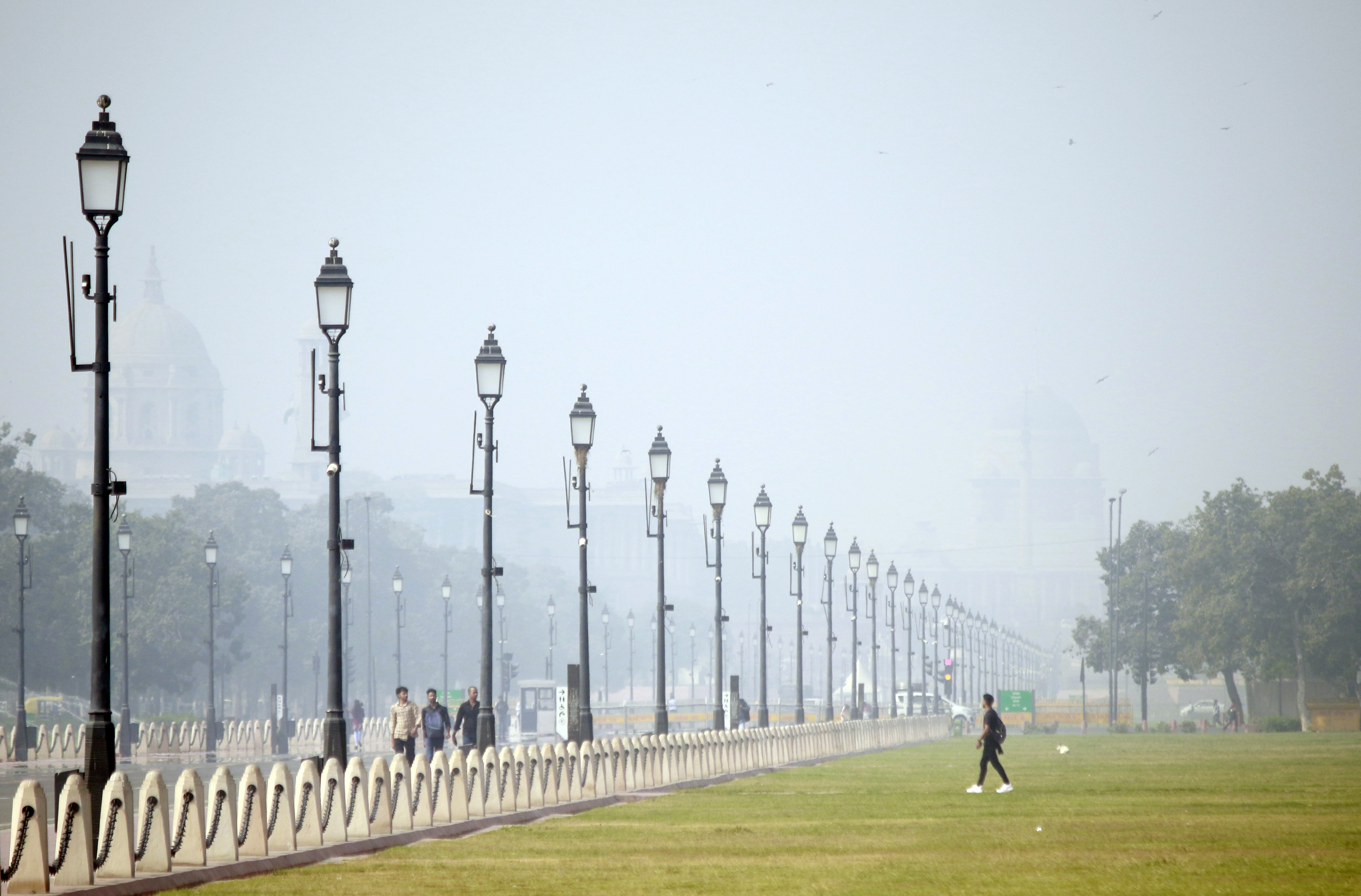
Noida, January 28 Strong winds and intermittent rain in the NCR over the past 24 hours have had a direct impact on air quality. After a long time, the Air Quality Index (AQI) has improved significantly in many areas of Delhi-NCR, providing significant relief from pollution and making the air breathable.
According to data from the Central Pollution Control Board (CPCB), Delhi Pollution Control Committee (DPCC), Uttar Pradesh Pollution Control Board (UPPCB), and International Medical Research Institute (IMD), the AQI in many areas of Delhi remains in the poor category, but in some areas it has dropped below the very poor category.
In Delhi, the AQI was recorded at 318 in Ashok Vihar, 329 in Bawana, 332 in Chandni Chowk, 326 in Rohini, 335 in Wazirpur, 338 in Sonia Vihar, and 306 in Vivek Vihar. The AQI was 301 in R.K. Puram and 301 in Siri Fort. However, some areas experienced relatively better conditions. The AQI was 165 in Shadipur and 186 on CRRI Mathura Road. In Noida, the AQI was 186 in Sector 62, 255 in Sector 125, 262 in Sector 1, and 235 in Sector 116.
In Ghaziabad, the AQI in Loni area was 320, while Sanjay Nagar recorded an AQI of 139, which is considered a relief. The AQI in Indirapuram was recorded at 276, and in Vasundhara at 258. According to the Meteorological Department, the minimum temperature may drop further in the coming days. The minimum temperature is expected to be 12 degrees Celsius on January 28th, while it is expected to reach 8 degrees Celsius on January 29th. The minimum temperature is expected to drop to 6 degrees Celsius on January 30th and 31st, with the maximum temperature hovering around 19 to 20 degrees Celsius.
According to the IMD forecast, moderate to light fog is expected in the NCR for the next two days. Shallow fog is expected on January 28th, while moderate fog is predicted for January 29th, 30th, and 31st. No weather warning has been issued at this time. Strong winds and rain have reduced the concentration of pollution particles, which is expected to partially improve air quality for the next few days. However, experts say that as temperatures drop and fog increases, pollution may increase again.