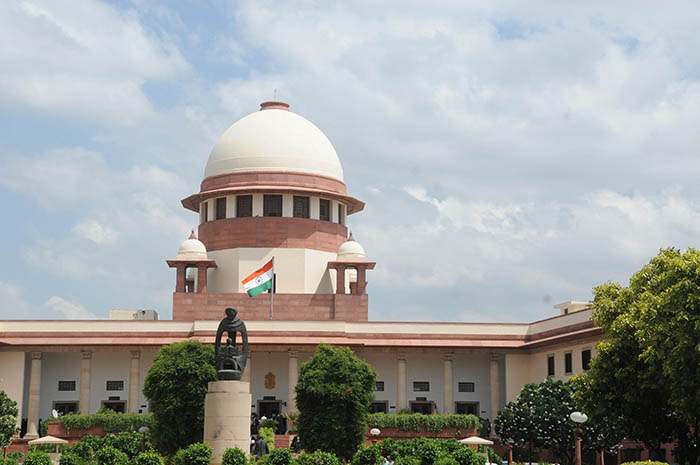
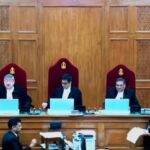
New Delhi, October 6 A Supreme Court lawyer, Rakesh Kishore, created a ruckus in court of Chief Justice B.R. Gavai during a hearing on Monday. It is alleged that the lawyer misbehaved with the Chief Justice and shouted slogans in the court, after which he was taken into custody and taken out of the courtroom by the police.
In fact, while the bench headed by the Chief Justice was hearing a mention of a case, the lawyer became agitated.
It is reported that the lawyer also shouted “We will not tolerate the insult of Sanatan.” However, CJI Gavai remained calm and continued the hearing.
Reports have emerged that after the uproar, the CJI told the lawyers present in the court, “We are not affected by such actions and the hearing will continue. There should be no disruption to the work of the court.”
The agitating lawyer was taken to the DCP’s office in the Supreme Court complex, where he is being questioned. Sources indicate that the Chief Justice has spoken to Supreme Court officials, the Secretary General, and the security in-charge following the incident.
Meanwhile, the Supreme Court Advocates-on-Record Association strongly condemned the incident. The association stated, “We unanimously express our anguish at the act of a lawyer who, through his inappropriate and unruly behavior, attempted to disrespect the position and authority of the Chief Justice of India and his fellow judges.”
The association passed a resolution stating that such behavior is not only unacceptable for a member of the bar but also undermines the foundation of mutual respect between the bench and the bar. The association termed it an attack on the independence of the judiciary and public confidence.
The association urged the Supreme Court to take suo motu cognizance of the incident and initiate contempt proceedings to send a message that freedom of expression carries with it the responsibility of restraint, especially for members of the bar who are officers of the court.