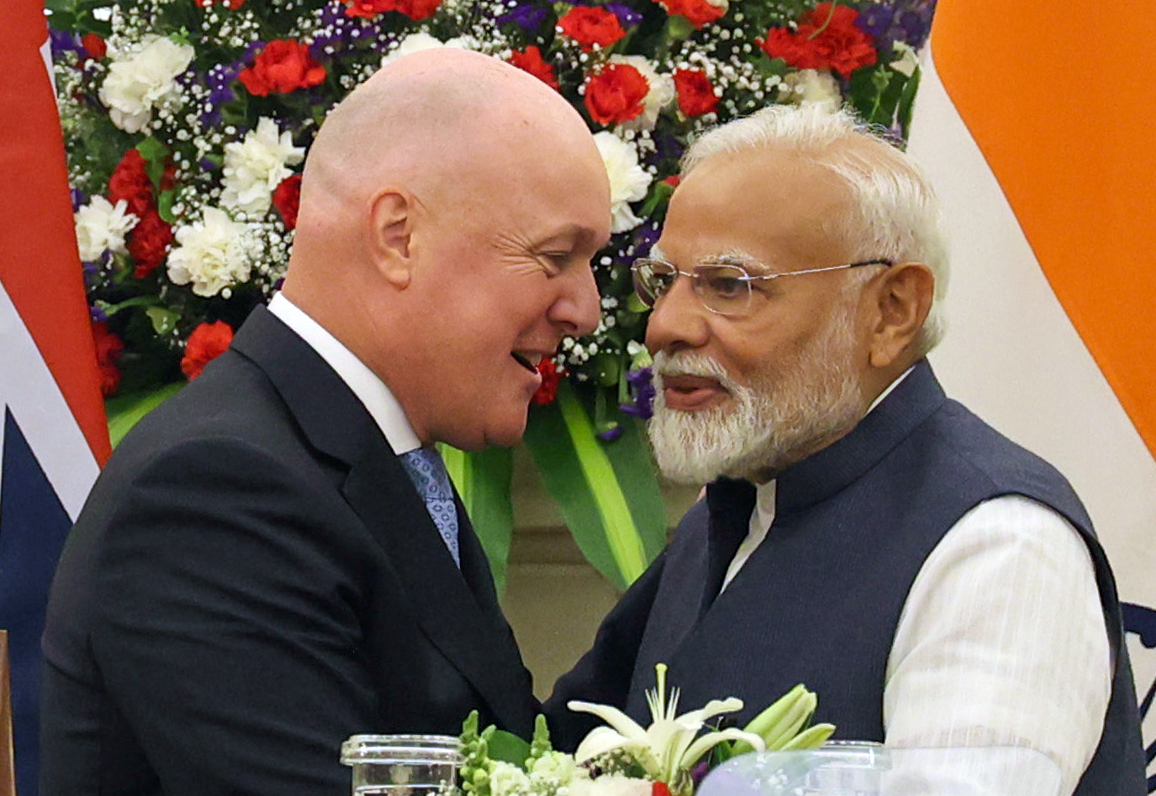
New Delhi, December 22 A free trade agreement has been finalized between India and New Zealand. Indian Prime Minister Narendra Modi and New Zealand Prime Minister Christopher Lusken held a telephone conversation, and the two leaders jointly announced a landmark India-New Zealand Free Trade Agreement (FTA). Investments between the two countries will be $20 million.
This is India’s seventh FTA in recent years, following those with Oman, the United Kingdom, EFTA countries, the UAE, Australia, and Mauritius. The leaders of both countries agreed that the FTA will serve as a catalyst for greater trade, investment, innovation, and opportunities between the two countries. They also welcomed developments in other areas of bilateral relations, including defense, sports, education, and people-to-people ties.
During the talks, the two leaders expressed confidence in doubling bilateral trade in the next five years and generating $20 billion in investment from New Zealand to India over the next 15 years.
A statement in this regard was also issued by the Prime Minister’s Office (PMO). According to the statement, negotiations began in March this year, and the two leaders concluded the FTA in a record time of nine months. This demonstrates the shared ambition and political will to further deepen relations between the two countries.
The PMO statement said, “The FTA will significantly deepen economic engagement between the two countries, enhance market access, increase investment flows, strengthen strategic cooperation between the two countries, and open up new opportunities in various sectors for innovators, entrepreneurs, farmers, MSMEs, students, and youth in both countries.”
The Prime Ministers also welcomed progress made in other areas of mutual cooperation between India and New Zealand, such as sports, education, and people-to-people ties, and reiterated their commitment to further strengthen this partnership.
This historic free trade agreement either completely eliminates or significantly reduces tariffs on 95% of New Zealand’s exports. This is considered the largest tariff concession in any Indian FTA to date.
Approximately 57% of products will receive duty-free access on day one, increasing to 82% upon full implementation. Furthermore, tariffs will be significantly reduced on the remaining 13% of products.
According to an official statement issued by New Zealand, this puts New Zealand exporters on par with or better than our competitors in many sectors. It also opens up opportunities for India’s rapidly growing middle class.
It further stated, “The Indian economy is projected to grow to NZ$12 trillion by 2030. The India-New Zealand free trade agreement creates enormous potential for our exporters in the world’s largest country and will significantly accelerate progress towards New Zealand’s ambitious goal of doubling the value of exports in 10 years.”