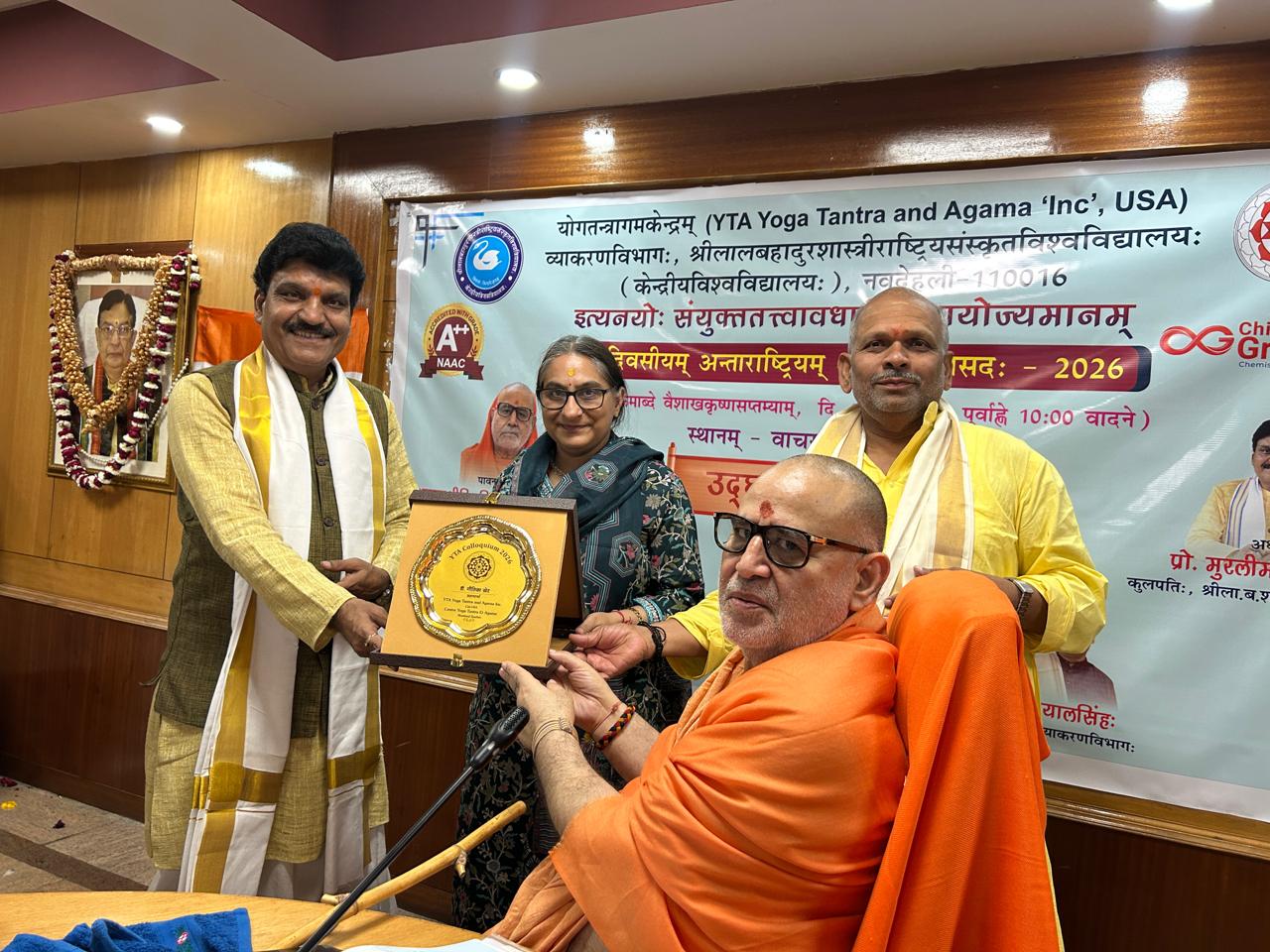
New Delhi: Lal Bahadur Shastri National Sanskrit University organised an international seminar in collaboration with YTA Yoga Tantra and Agam Inc. on Tantrāgama, bringing together eminent scholars, researchers, and practitioners from across the globe to deliberate on the philosophical and practical dimensions of this ancient Indian knowledge tradition.
In the inaugural session, Former Vice-Chancellor of the Sampurnanand Sanskrit UniversityPadma Shri awardee Abhiraj Rajendra Mishra, the Chief Guest, underscored the immense intellectual depth and cultural significance of Tantrāgama literature, noting its enduring contribution to India’s philosophical heritage and its growing importance in contemporary academic discourse. He further remarked that his extensive study and research in Tantrāgama literature have always fascinated him, particularly in understanding the human mind and the profound experiential insights of ancient seers as reflected in sacred texts. Referring to traditions such as the Vaikhānasa and Pāñcharātra Āgamas, as well as texts like the Rudra Yāmala Tantra, he highlighted their scientific and spiritual dimensions that guide individuals towards mindfulness and the attainment of supreme energy. He emphasised that svādhyāya (self-study) has been a foundational pillar of India’s knowledge systems for centuries.
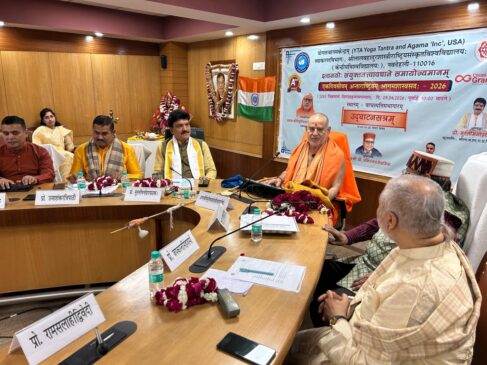
The Vice-Chancellor of the University, Murli Manohar Pathak, highlighted the institution’s commitment to promoting traditional knowledge systems through rigorous academic engagement and international collaboration. He elaborated on how Vedic sciences have guided humanity to look beyond the material world and follow the path of truth through inner consciousness, which fosters tranquillity, happiness, and respect for all beings, thereby contributing to a harmonious world. He also explained the meanings of Āgama and Nigama, describing how these interconnected concepts help in understanding the essence of ancient knowledge for the wider prosperity of the universe and human life.
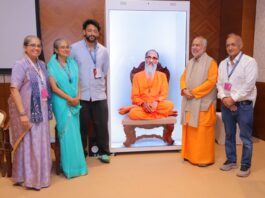
Presiding over the gathering, Swami Paranand Tirth, Head of YTA Yoga Tantra and Agam Inc., emphasised the global relevance of Tantrāgama traditions, highlighting their role in harmonising spiritual wisdom with modern life and fostering inner transformation. He noted how the vast corpus of Sanskrit literature enables humankind to understand the hidden dimensions of the human body and mind, and how disciplined meditation practices can elevate consciousness. He also referred to several sacred texts that need wider dissemination so that seekers may benefit from Vedic wisdom through meditative practices.
On the sidelines of the seminar, Prof. Ramsalahi Dwivedi informed that similar seminars and discourses had been organised in the past and were well received by scholars and participants. He elaborated that the ancient science of purification of body and mind is richly preserved in Tantrāgama texts, which constitute a valuable intellectual and spiritual treasure of India. He emphasised that these texts have contributed to human well-being for centuries and continue to remain relevant today. He further explained that the Tantrāgama tradition is articulated through the divine dialogue of Shiva and Shakti across various scriptures, broadly categorised into Shaiva and Vaishnava Tantra texts. According to him, a sincere sādhaka must engage deeply with these texts, as they have the potential to elevate human consciousness and enable individuals to transcend material attachments through disciplined spiritual practices, offering a scientific and experiential pathway to lasting happiness and inner fulfilment.
Scholars from various universities discussed the significance of classical texts such as the Kularṇava Tantra, Vijñāna Bhairava Tantra, Yoginīhṛdaya Tantra, Prapañcasāra Tantra, Śāradātilaka Tantra, Saundaryalaharī, Ahirbudhnya Saṃhitā, Tantrāloka of Abhinavagupta, the Yamala Tantras, and other sacred works, which have greatly enriched Sanskrit literature.
Prominent scholars who presented research papers included Prof. Kamla Bharadwaj, Prof. Jaykant Singh Sharma, Prof. Diwakardutt Sharma, Prof. Dayal Singh, Prof. Sujata Tripathi, Prof. A. S. Aravamudan, Prof. K. Anantha, Prof. Devendra Mishra, Dr. Ashok Kumar, Dr. Archana Kumari, Dr. Arti Sharma, and Dr. Pravesh Vyas of SLBSNSU; Prof. K. Satish of National Sanskrit University; Prof. Umashankar Tripathi of Government P.G. College, Mahoba; Prof. Pramod Kumar Sharma of Jawaharlal Nehru University; Dr. Geetika Kaw Kher of Amity University; Dr. Sunil Joshi of Hindu College; and Dr. Ashok Semwal of Shri Bhagwan Das Adarsh Sanskrit College, Haridwar.
The seminar witnessed enthusiastic participation, with more than 80 undergraduate, postgraduate, and PhD research scholars presenting papers on diverse aspects of Tantrāgama, reflecting the growing academic interest in this field.
Participation certificates were distributed by Swami Paranand Tirth and Prof. Murli Manohar Pathak during the valedictory session. Volunteers of YTA Yoga Tantra and Agam Inc. also distributed the organisation’s annual newsletter.