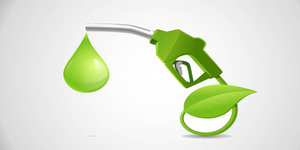
New Delhi : In a major move to promote ethanol-based green fuel, the Central Government has amended the Central Motor Vehicles Rules, 1989. According to a notification issued by the Ministry of Road Transport and Highways, new emission and fuel standards for flex-fuel vehicles—covering 100 percent ethanol (E100) fuel—have come into effect as of Monday.
Under the new regulations, the government has updated various emission standards and testing procedures by replacing references to “E85” with “E85 or E100.” This paves the way for the use of 100 percent ethanol fuel in flex-fuel vehicles. However, the government has clarified that E85 or E100 fuel can only be used in flex-fuel vehicles specifically designed for such fuel by the Original Equipment Manufacturers (OEMs).
The amended rules also introduce changes to certain vehicle and fuel categories. For instance, in one of the emission tables, the gross vehicle weight limit has been increased from 3,000 kg to 3,500 kg. Furthermore, technical amendments have been made regarding Hydrogen-Compressed Natural Gas (HCNG), 20 percent ethanol-blended petrol (E20), biodiesel standards, and emission testing protocols.
Earlier this year, Union Minister Nitin Gadkari stated that if vehicles were to run entirely on ethanol, the fuel cost could be equivalent to approximately ₹25 per litre of petrol.
He further noted, “Ethanol is already being used in 19 countries worldwide, and in India, too, there have been no significant complaints regarding vehicles using it so far.” Meanwhile, a report by Brickwork Ratings estimates that if the country achieves its E25 blending target, the demand for ethanol could rise to 17.9 billion litres by the financial year 2030-31.
According to the report, the current installed distillation capacity of 18.25 billion litres is sufficient to meet this demand. Even if the ethanol blending level remains at E20, the demand is projected to be around 14.3 billion litres, which would translate to a capacity utilisation of approximately 78 percent.