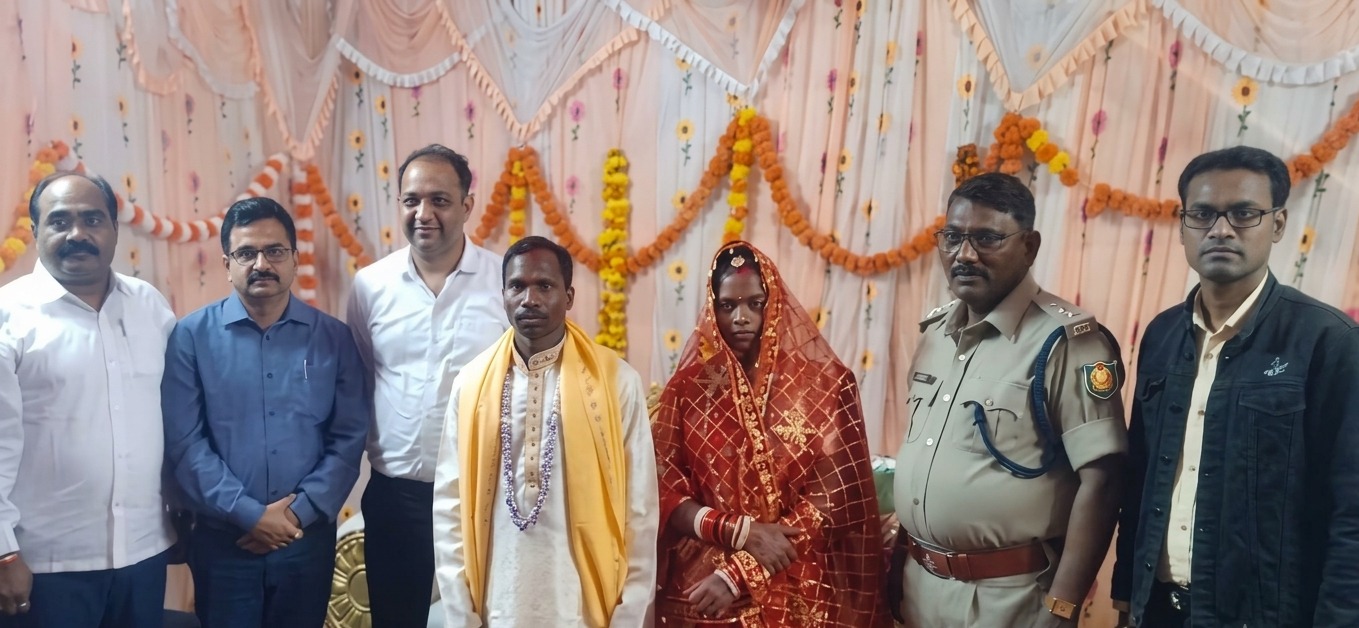
Hazaribagh, October 28 :Two former Naxalite commanders, who left behind a harrowing path of violence and guns to return to the mainstream of society, reached a beautiful new milestone in their lives on Wednesday. As they joined hands to begin a new chapter, their union—taking place within the Hazaribagh Open Jail—was witnessed by officials from the Hazaribagh Police and the district administration.
Other inmates residing in the open jail joined in the celebrations, dancing and offering their blessings to the couple. The bride and groom are Suresh Singh Munda, a resident of Bundu (Baruhatu) in Ranchi district, and Somwari Hembram, from Tamar (Arahanga). Once, both had walked a path of destruction in the forests, but, influenced by the government’s surrender policy, they chose to abandon violence forever. Following their surrender, both had been undergoing a rehabilitation process while living in the Hazaribagh Open Jail.
It was through a compassionate initiative by the district administration and the police that the decision for their marriage was made. The ceremony was conducted in Hazaribagh with great fanfare and in accordance with traditional rites. Fulfilling the necessary legal requirements, the District Marriage Officer of Hazaribagh, Rajesh Ekka, registered the marriage on the spot, granting their union both social and full legal recognition. Perhaps the most moving and inspiring aspect of the wedding was how the security personnel and administrative officials ensured the couple did not feel the absence of their own families.
Senior officials from the Hazaribagh Police and the district administration took on the roles of both the bride’s and groom’s families. They welcomed the newlyweds with traditional customs and presented them with gifts, wishing them a happy and prosperous future. The challenge of rehabilitating individuals who have renounced violence and returned to the mainstream from Naxalism-affected areas is not limited to security concerns alone. It is equally important to pave the way for them to lead a normal social life. Employment, family life, and social acceptance are crucial aspects of their rehabilitation.